![Vicente Albán (attr.) [Quito (Ecuador), 1723 - after 1796], The Marriage Proposal](https://static-assets.artlogic.net/w_2400,h_2400,c_limit,f_auto,fl_lossy,q_auto/ws-jaimeeguiguren/usr/images/artworks/main_image/items/50/50a3e138beab4c078c94ed4d276f19cd/sesi-n-sin-t-tulo4304-cut-edge.jpg)
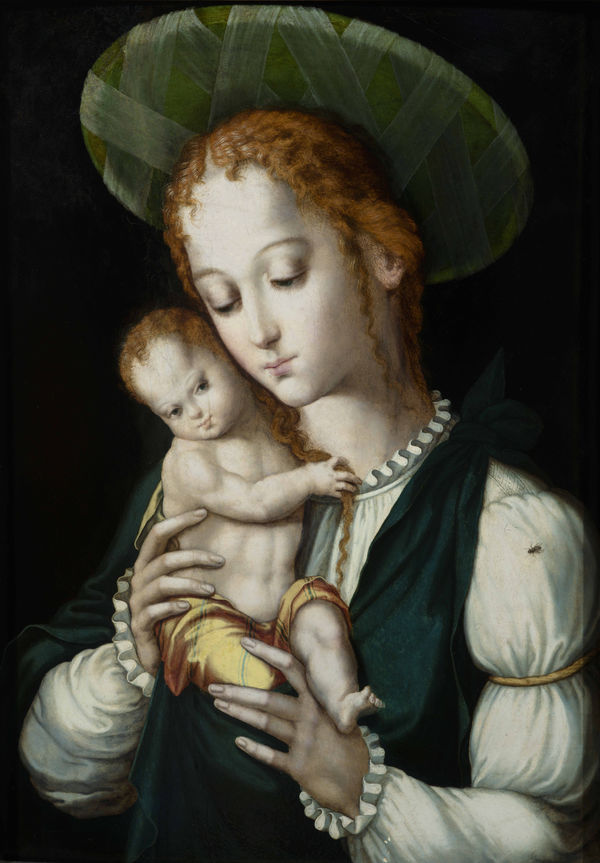
Luis de Morales (El Divino), Badajoz, 1510 - Alcántara?,1586, Virgin of the Hat
Jaime Eguiguren Art & Antiques presents at TEFAF Maastricht 2026 an exceptional selection of Spanish and viceregal works that engage in dialogue as testimony to one of the most fertile cultural phenomena of the Early Modern period: the expansion, adaptation, and transformation of European art in the Americas. This collection—of which we present here a significant part—brings together masters of the Spanish Golden Age with paintings and sculptures from the Latin American viceroyalties, revealing a process of artistic and spiritual syncretism of extraordinary sophistication.
The Spanish works, with their technical refinement and compositional clarity, establish the visual language that traveled to the New World; the viceregal pieces, in turn, reinterpret that legacy by incorporating local sensibilities, Andean iconographies, indigenous materials, and a powerful symbolic dimension. The result is an aesthetic mestizaje in which European tradition and Indigenous culture do not stand in opposition but merge into a new visual and theological synthesis.
Within this transatlantic dialogue, religion functions as the central axis: devotion, liturgy, and sacred representation become vehicles of cultural exchange. The collection presented at TEFAF not only displays masterpieces but also invites reflection on identity, hybridity, and artistic circulation in the Hispanic Baroque world.
-
-
 Luis de Morales (El Divino), Badajoz, 1510 - Alcántara?,1586Virgin of the HatOil on panel
57 × 41 cm
-
Juan van der Hamen y León (Madrid, 1596 – 1631)Large Fruit Stand with Figs and Flower Vases, 1623Signed and dated in the lower left corner
Oil on canvas57 × 95 cm -
Juan van der Hamen y León (Madrid, 1596 – 1631)Large Fruit Still Life with Pears, Figs and Apricots, 1627Signed and dated in the lower right corner
Oil on canvas
61 × 97.5 cm
-
Luisa Roldán, called “La Roldana” (Luisa Roldán called “La Roldana”)Virgin with ChildPolychrome terracotta
48 x 25 x 23 cm -
Fray Diego de Ocaña (Ocaña, 1565 – Mexico, 1608) attr.Virgin of Guadalupe of ExtremaduraBolivia, probably Chuquisaca (Sucre) or Potosí, first half of the 17th century
Oil on canvas laid down on panel, with painted application of simulated jewels and iridescent decoration over gold98 × 73 cm -
NativityViceroyalty of New Granada, Quito
(present-day Ecuador)
Second half of the 18th century
Carved and polychromed wood and alabaster with applied glass and mother-of-pearl elements
33.5 × 21.5 × 22 cm (Saint Joseph)
33.5 × 21.5 × 22 cm (Virgin)
19 × 6.5 × 4 cm (Child)
-
Stained Glass, Île-de-France or Normandy (France) Second quarter of the 13th centuryColored glass, cut and leaded
60 × 64 cm -
Vicente Albán (attr.) [Quito (Ecuador), 1723 - after 1796]The Marriage Proposalca. 1783/1785
Oil on canvas
78.3 x 97.2 cm -
Tomás de MerloLamentation over the Dead Christ, Antigua Guatemala, 1694-1739ca. 1730-1739
Oil on copper
59.5 x 46.5 cm
Signed: Merlo facat en Guathemala
-
Pedro de MenaVirgin of the Immaculate Conception, Circa 1665Parcel-gilt and polychrome woodHeight: 84 cm
-
Leonardo Flores, 1650-1710?THE LAST JUDGEMENT, Audiencia Real of Charcas (Actual Bolivia), 17th centuryLeonardo Flores (1650-1710?)
Known as the Master of the School of El Collao
Audiencia Real of Charcas (Actual Bolivia)
17th centuryOil on canvas
208.5 x 153.7 cm -
Miguel Cabrera (Mexico, 1695-1768)The Virgin and Child, Circa 1751–1768Oil on canvas
123.5 × 99.2 cm
-
Altarpiece of the Virgin of Guadalupe, Guatemala, circa 1750-1780Mirror plate, carved and gilded wood and oil on metal sheet
60 x 46.5 x 8.5 cm -
Bernardo Bitti [Camerino(Italia), 1548 - Lima(Peru), 1610]The Virgin and ChildOil on canvas
75 × 64 cm -
The Triumph of the Immaculate Conception, Cuzco, 18th centuryOil on canvas
52 × 61 cm
-
Our Lady of Guápulo, Cuzco, Peru, late 17th–early 18th centuryOil on canvas
157.7 x 114.1 cm -
The Fantastic Chinese Stove-kettle of the Three Worlds, China, Ming Dynasty, late 16th century, early 17th centuryCast, beaten, repoussé, chased, engraved and burnished silverHeight 47 cm; weight 5,050 gLong-Fenghuang Stove-Kettle 龙凤火壶
Formerly known as “Caquesseitão” -
An Ottoman Lion Hunt, Austrian School, first half of the 18th centuryOil on canvas
186 × 293 cm
-
Torcuato Ruiz del Peral (Exfiliana, Granada, 1708 – Granada, 1773)Saint Michael Defeating the Demon, 1740–1770Carved and polychromed wood with applied lace and silver accessories
94.7 × 42 cm -
Pair of Lanterns, Possibly Rio de Janeiro, Brazil Late 18th centuryCast silver, repoussé, chased, and engraved
Marks and hallmarks
H: 215 cm W: 26 cm D: 26 cm -
Mudéjar Gothic Lectern, Second half of the 15th centurySpain (former Crown of Castile)
Castilian workshop with Central European influence
Carved, pierced, and polychromed walnut wood
31.5×24×31 cm
-
Altar Frontal Plates, Puno, Viceroyalty of Peru, circa 1700–1735Repoussé, chased and punch-decorated silver
58.5 × 58.5 cm (central plate); 57.5 × 58.5 cm;58.5 × 58.5 cm (lateral plates)
Weight: 4,310 g (central plate); and 3,500 g and 3,610 g (lateral plates) -
Pair of Ornamental Plaques, Bolivia (Upper Peru), 17th centurySilver in its natural color, cast, repoussé, and chased
55 × 35 cm
-
Barniz de Pasto Box, Pasto (Colombia) 17th centuryWood, polychrome lacquer and silver
17 × 24 × 11.7 cm
-
Vessel, Pasto (Colombia), 17th centuryCarved wood with Barniz de Pasto
19 × 10 × 9.5 cm -
Juan de Anchieta (Guipúzcoa, 1533-Pamplona, 1588)The Prayer in the Garden, Fall on the Road to Calvary, Navarre, 1576-1588Polychrome by Juan de Landa
Doc. Lumbier, 1591-1613
Gilded, painted and upholstered walnut wood
77 x 46 x 8 cm both -
Pedro de MenaA New Pair Of Busts Ecce Homo and Dolorosa, 17th centuryPartially-gilt polychrome woodEcce Homo: 31 x 24 x 15 cm
Dolorosa: 31 x 24 x 15 cm
-
Pava-hornillo (Stove-kettle), Peruvian Viceroyalty, Potosí (Bolivia), ca.1725-1750Cast, burnished and engraved silver with picado de lustre punchmarks
35×29.3 cm
Weight 2,319 g -
The Antisuyu PanelsCuzco (Peru), first half of 17th century
Polychromed wood, Andean cedar (Cedrela angustifolia)
53×96 cm; 48×96 cm -
MirrorCaptaincy General of Guatemala (present-day Guatemala)
First half of the 18th century
Wood, tortoiseshell, and mother-of-pearl
123 × 88 cm
-
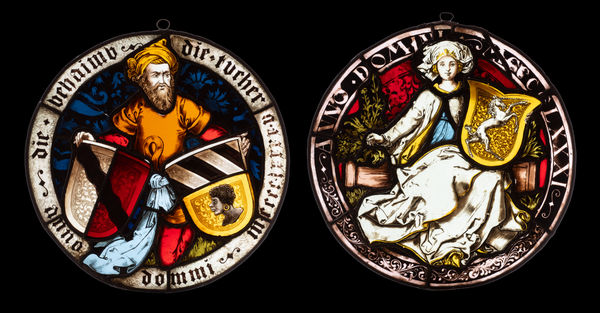
Two Stained-Glass EmblemsShield with a Unicorn, Held by a Lady
Shield with a Griffin’s Foot and Shield with a Cock Held by a Moor
Workshop of Peter Hemmel de Andlau
(Andlau, Lower Alsace, ca. 1420 – Strasbourg, ca. 1506) based on designs by the engraver Martin
Schongauer. Probably made for Nuremberg
Dated 1481 and 1495
Glass-stained, pot-metal glass, vitreous paint and lead
Diameter: 31 cm -
Saint Martin de Porres, Peru, 1876Oil on canvas
40 × 32 cm -
The Household of NazarethGuatemalan School, 18th century
Oil on canvas
50 × 40 cm
-
Lacquered BateaPeribán, Michoacán, Mexico, 17th century
Lacquered wood
57 × 57 cm -
Miguel González (New Spain, late 17th century – early 18th century)Assumption of the Virgin MaryOil and mother-of-pearl on wooden panel
65×88.8 cm -
Miguel González (Active in the 2nd half of the 17th century)The Apostle James the GreaterMexico, 17th century
Oil and mother-of-pearl on wooden panel
84×70 cm (framed)
56×40.6 cm (unframed)
-


![Vicente Albán (attr.) [Quito (Ecuador), 1723 - after 1796] The Marriage Proposal ca. 1783/1785 Oil on canvas 78.3 x 97.2 cm](https://static-assets.artlogic.net/w_600,c_limit,f_auto,fl_lossy,q_auto/ws-jaimeeguiguren/usr/images/artworks/main_image/items/50/50a3e138beab4c078c94ed4d276f19cd/sesi-n-sin-t-tulo4304-cut-edge.jpg)


![Bernardo Bitti [Camerino(Italia), 1548 - Lima(Peru), 1610] The Virgin and Child Oil on canvas 75 × 64 cm](https://static-assets.artlogic.net/w_600,c_limit,f_auto,fl_lossy,q_auto/ws-jaimeeguiguren/usr/images/artworks/main_image/items/1d/1de04ffef259419aa1ab4773b41e8ab8/bitti-madonna-child-resize.jpg)